Sundance 2011 comes to you Jan. 27 (possibly)*

Get ready for the hype overload that will be the 2011 Sundance Film Festival. It officially kicks off Thursday, Jan. 20, opens for business Friday, Jan. 21 and continues for 10 days, with winners announced Saturday, Jan. 29.

Between now and the first of February, it will be hard to get away from the media coverage. That said, here’s a discussion by actress Vera Farmiga, who’s starring in “Higher Ground,” a film in the U.S. Dramatic Competition produced by my friend and indie film legend, Gill Holland:

To see this particular film during the next two weeks, though, you have to be in Park City, Utah.

— But don’t despair if you don’t have an incredibly overpriced hotel room booked for the gala.

*If you live in Ann Arbor, MI; Brookline, MA; Brooklyn; Chicago; Los Angeles; Madison, WI; Nashville; San Francisco or Seattle — the Sundance 2011 festival comes to you.

For one day, Thursday, Jan. 27th. And at specific arthouse venues.

This is the second year Sundance has managed this event, and its intent is to promote the Institute, the individual films and filmmakers, and the independent, arthouse theaters where the screenings are held.

And Park City will be directly involved: the “Life In A Day” documentary that kicked off on YouTube this summer — inviting submissions for ordinary people to record what was happening on July 24 around the globe — will be shown there as part of the connected, nationwide experience.

“A major component of the Sundance Institute mission is to expand and engage audiences for independent storytelling,” Keri Putnam, Sundance Institute Executive Director, said. “Sundance Film Festival USA is an extension of the Institute’s year-round support of independent theaters across the country – designed both to provide people with access to films premiering at the Festival, and to encourage interaction between artists and audiences.”

Oh, and the Sundance Channel might possibly provide some information about what’s going on during the festival. Plus CNN, MSNBC, Fox, USA Today, the New York Times, etc etc etc. And let’s not forget US Weekly.
Pondering “The Philosopher Kings”

First, the clip, then the story:

This is directed by Patrick Chen, produced by Chen and Greg Bennick.

If you work in higher education, you should take the time to watch “The Philosopher Kings” documentary. It’s available on iTunes and Netflix (streaming and DVD). Consider it a homework assignment, or a continuing-education requirement.

For those not in the sector, I’m somewhat torn about recommending this documentary, which focuses on the lives of janitors and custodians at a handful of prestigeous, well known universities — including Caltech, Cornell University, Duke University, Princeton University and U.C. Berkeley, to name most of them.

I was led to this doc by a friend who knew about the Duke University connection: one of the people profiled is Oscar Dantzler, who takes care of Duke Chapel itself.

Don’t get me wrong — it’s certainly well shot (in fact, some of the visuals are absolutely gorgeous), has a fantastic music score,  is well edited, and the people featured have interesting life stories (but of course; otherwise, they wouldn’t have made the final cut).

In my opinion, while “The Philosopher Kings” is a good documentary — it simply isn’t a GREAT documentary.

And that’s problematic.

“The Philosopher Kings” was initially pitched to me as a story about these custodians/janitors, who worked at these great colleges and universities — and described what THEY learned while at work.

The documentary barely touches on that theme before pulling back and showing the real story, which is the disconnect between these people who are seen every day by faculty, staff and students — but aren’t really seen by them at all.

Where this project falls short is its nearly complete lack of interviews with some of these same faculty, staff and students, to find out what they know, if anything, about the lives of those also in service to the institution, and whose daily efforts make the offices, restrooms, lecture halls and labs habitable and useable.

In fact, if it weren’t for a sound bite delivered by former President Bill Clinton, who spoke at Duke University about this exact subject — but as part of a speech a different focus — there may not have been such a concise summary of this theme of seen but not really seen.

The exploration of the lives of the subjects is astounding. Most all of them have heartbreak in their past, and seem to have conquered that as they sought out normal lives.

It also seemed readily apparent that few if any people at these universities knew anything about these personal struggles and triumphs. Maybe that’s appropriate to a point — work is work, personal is personal, right?

But a university, a college, a place of higher learning is supposed to be about sharing ideas and experiences, building on knowledge from the past and the present, and moving society into the future with this foundation.

In a way, though, I want to promote “The Philosopher Kings” because it actively (and perhaps unknowingly) demonstrates a theme that I’ve been promoting for years. (And yes, I’ve worked in the higher education sector for a number of years, so I’m not simply shouting from the bleachers here).

Most colleges and universities are loaded with great stories, generated by their own people — faculty, staff, students, alumni and local residents.

And most colleges and universities do a poor job of identifying all but the most obvious stories (superstar faculty, high-achieving students, successful/famous alum) and getting these great stories out into the world.

Technological restrictions have fallen. True, budgetary constraints in this economy may be real factors.

But the limitations of imagination, the focus on how things have traditionally been done, and the will to move past categories, class and caste designations seem to be very real, if usually unspoken, barriers.

And it doesn’t require a philosopher king to realize that’s a shame.

On being on the road

Which is worse? Okay, maybe “worse” implies something truly horrible.

How about — which, to you, would be harder to deal with?

After a long day of working on the road, coming back to:

1. A small, empty hotel room; or

2. A large, empty hotel room.

After a couple straight days, I think the large (but empty) hotel room is worse for me, personally.

All that space reminds me of what (or more precisely, whom) isn’t there.

A small room just means my stuff can fill up a lot of that space.

With a big room, there are expanses and echoes and a lot more empty.

But this will pass. And so will these mid-winter traveling blues.

– James

“One True Thing” – the documentary starts

First, the clip, then the story:

There are a lot of projects on my short list, but it’s the usual excuses of too long a list, and not enough money or time.

But excuses just don’t cut it anymore, so my plan to get this documentary project going is to just do it — and structure the plan in such a way that all the shooting can be done on incredibly flexible schedules, and the budget can remain miniscule (for now, at least).

So here’s “One True Thing”.  The idea is that our team sits down with someone at their preferred location, and once everything’s set up, all we do is ask for your first name, and to tell us one true thing.

It can be anything, from trivial to profound. So long as it’s true to you.

We also have some ground rules for ourselves/the project:

— First name only

— We won’t edit your response once you start on your true thing. That means once you being, we’ll run until you stop. So, no edits to make you look better, worse, or more concise.

— You can have more than one thing to say. We’ll just treat them separately.

— Don’t pressure yourself. We don’t expect Dalai Lama-league answers, so no worries. Something about your cat is acceptable…

What do WE get out of all this? Good question.

Expectations:

Sure, the first clip is three guys of various ages working in various levels of seriousness.

The real payoff should be when we reach a certain critical mass and broader themes emerge. Personally, I fully expect this to start focusing on religion, relationships and philosophy — but I could be completely wrong.

Maybe folks hone in on sports and cosmology, who knows?

If I were to point to an existing model for how I expect this to turn out, I’m going to reference one of my all-time favorite books and life guides: Directing the Film: Film Directors on Their Art, edited by Eric Sherman.

Yes, you’ll find a lot of practical advice on nearly every aspect of filmmaking by some of the greatest in the field — but that’s essentially a bonus.

What I find great is that within Sherman’s 352 pages of collected wisdom, you can read one absolutely sterling, profound and compelling piece of advice put forth by an absolute master of their craft — and on the next page, there’s another absolutely sterling, profound, and compelling piece of advice from yet ANOTHER master, completely and absolutely contradicting the first.

Example: Think about rehearsing your actors. There are a number of directors that weigh in on how their actors must be absolutely well rehearsed and prepared, so there’s no doubt about the lines, nuances or inflections before the cameras roll.

And there are a number of directors that talk about why anything beyond nominal rehearsal kills the energy and dampens the creative sparks from fresh discovery.

Who’s right? They all are. And that’s the point — the truths within this book are the truths that work for each person.

So that’s where I personally see “One True Thing”‘s potential. But we’ll see.

Technical Points:

As we add in clips, we’ll update the master video, and keep individual clips for easy reference.

We’re also COMPLETELY OPEN AND ENCOURAGING of outside submissions. So feel free to crank up your webcam or video recorder, work up a segment, and send it on.

Contact me at OneTrueThingDocumentary@gmail.com, or visit the project site at OneTrueThingDocumentary.com .

And of course, a special shout-out of thanks to my Creato Destructo compatriots, Jerry and Shay Stifelman. (Tracey, let’s get you taped!)

– James

It’s an HD World

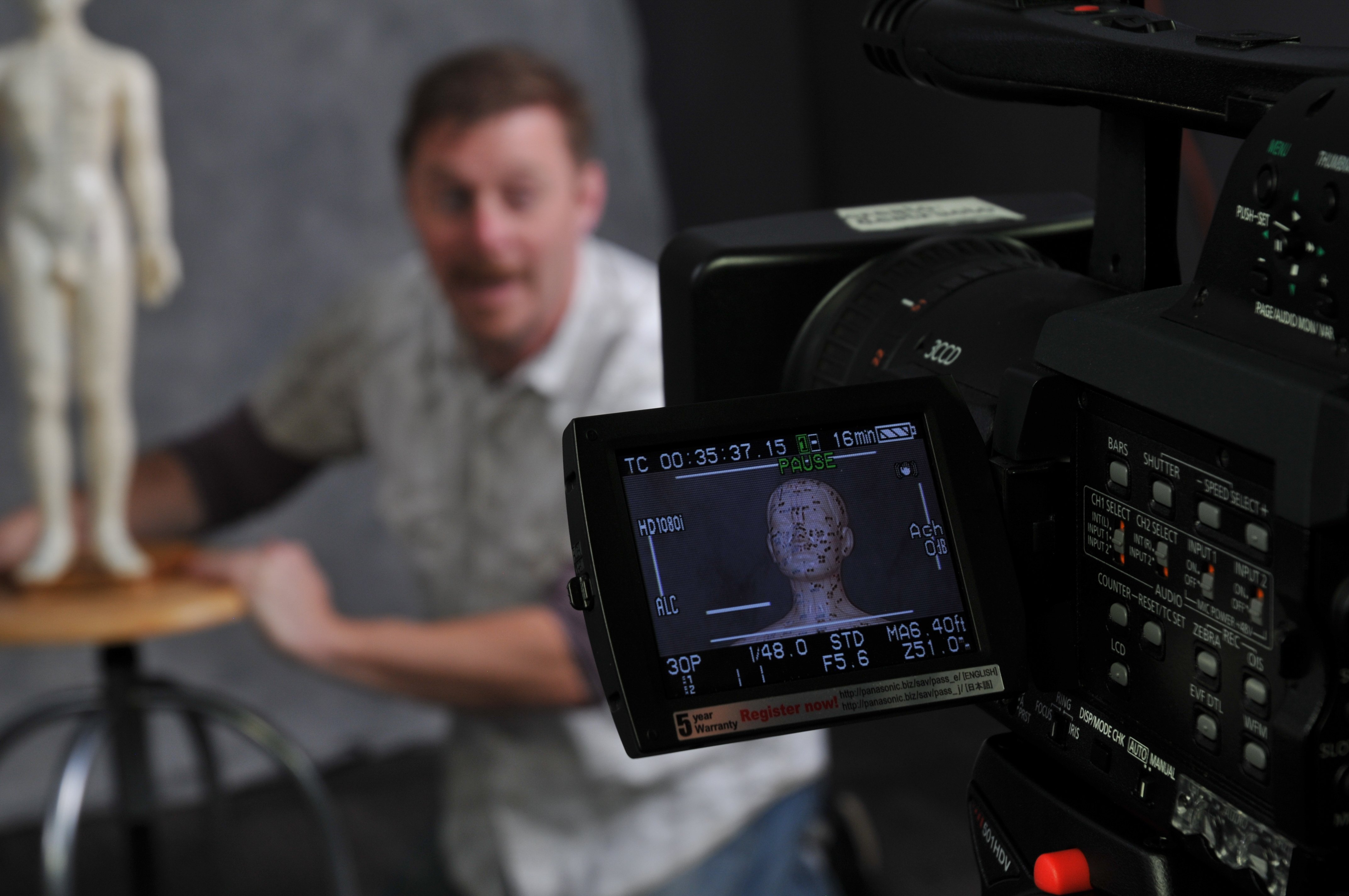
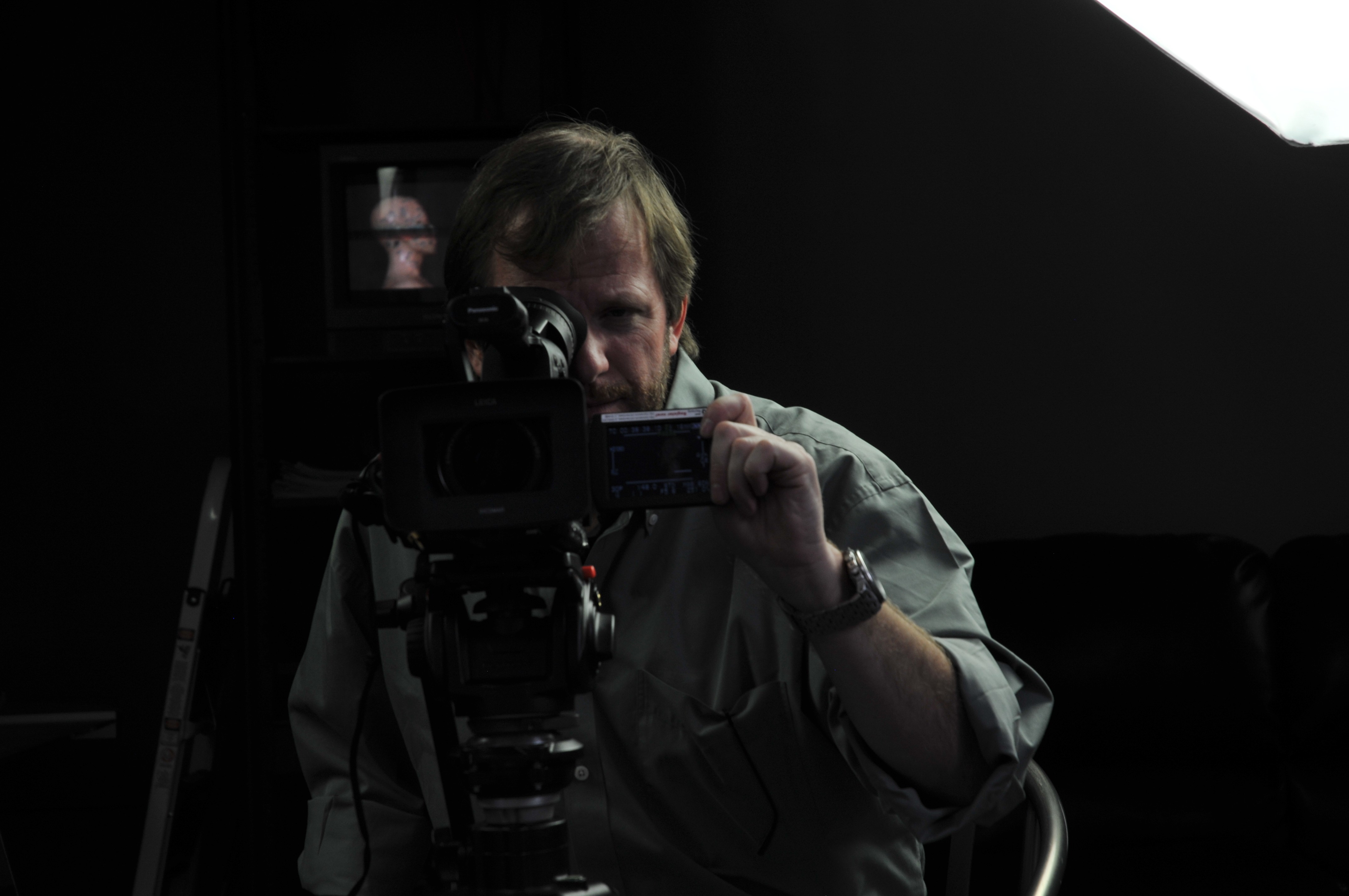
Had a new studio shoot this week — as in, a new studio space and a new project.

Viewfinder view

The clients didn’t have a huge budget, but recognized the need for video, and they were willing to move around some priorities to make sure this was done in high definition.

I’m amazed that some groups still ask for or even REQUIRE  480-based origination video. There are a lot of ways to shoot in HD as your source and downconvert from there if necessary. Even if you need a final 4:3 product. Even if this is “just for the web”. Even if you’re not sure how the project will evolve.

If you think your project can’t be done on HD… seriously, we need to talk.

James Hyatt

Fin.

Epic Video, Underground Band & Lessons Learned: Part 1, Reasons Why

First the video, then the story. (You may want to grab a beer first; this is 11 minutes long):

The name of the band is Shit Horse. Two words.

Yes, that’s basically a no-go at most American radio stations. Yes, it’s harder to advertise gigs or be listed in event directories. Yes, it’ll difficult to have CDs in stores (Wal-Mart, I’m looking at you…).

For Shit Horse, though, that’s missing the point. More precisely — that’s EXACTLY the point.

Background:
They came together… not as a joke, more like a conspiracy.

Part of the formation was planned: the first members came together to play the XX Merge fest in 2009.

Part was purely accidental, possibly even a twist of fate: because someone else was sick, the first three members grabbed lead vocalist Danny Magic, pretty much off the street*. (*Possibly apocryphal)

Their first release is cassette-only, in June 2010. Let me make this clear: not June 1990. Cassette only, 2010. The band held to a strict “no digital” discipline all the way through the recording process, staying analog as long and as far as possible.

The first run of cassettes sold out, and they’re spooling a new batch. But many of their fans are overseas (Shit Horse is huge in the UK; check out the mania here, and Culture Deluxe’s postings; and some proof BBC Radio 6 likes them), and shipping individual tapes is both a time-consuming pain and relatively expensive. So the band and their label, Odessa Records, have relented and produced a digital album download — primarily to make it easier for non-US fans to get their music.

Hype Factor:
The real question is: Are they the real thing?

Yes.

And like most real, authentic things, they’re far from perfect. Half their live shows are so great I’d swear we were witnessing the rebirth of rock, blues, soul, funk, punk and maybe a little jazz — all at once. They’ve made me wonder if this is the start of a new-millennial return to Americana music, with a fully aware, multi-racial, and multi-generational  group (members are in their 20s, 30s, 40s and 50s) .

During those shows, I get my hopes up and think: the Delta blues were the call. The Rolling Stones were the response. Is it possible these guys are the fully realized testimony?

But then other shows can end with at least one band member storming offstage, swearing he’s gone for good. And if you’re in the audience, holding some hope in your heart, there’s a bitter tang of disappointment, as the band plays the soundtrack to every major letdown of your wild dreams and impossible hopes.

But they keep reuniting, and keep playing blistering, brilliant shows. At least for now.

What Happened:
And that should help explain why our Creato Destructo video team (helmed by Jerry Stifelman) would spend most of the summer and burn through many personal favors to crank out a three-act tribute/showcase/document — for a group of musicians that might not be playing together in the new year.

Some things, you do for the love of something bigger than money, free time, and air conditioning.

Sometimes, you just have to commit.

And so we did.

Preview: How I Spent My Summer Vacation

What about the “how” of what it took? That’s coming in another post.

– James

Penland School of Crafts, Hoss Haley, Auctions and Sculptures

First the video, then the story:

This was an absolute blast to produce and edit, for several reasons.

I’m an Asheville, NC native, so to (finally) be part of the historic Penland School of Crafts family has a lot of personal meaning. Penland dates back to the 1920s and Lucy Morgan’s efforts to both learn native Southern Appalachian crafts and help residents market their wares. It has since evolved into an internationally-recognized center for craft education, history, innnovation and experimentation across a wide range of styles and media. Plus, its location and campus are simply breathtaking.

Penland has a benefit auction every year, with (mostly alum and faculty) artists donating pieces, and the proceeds going to help sustain the school’s mission. I basically showed up to this year’s auction (Penland’s 25th) with gear and recorded nearly everything and everyone I could. Okay, they knew I was coming, but this was a first-time experience for both of us.

The signature work — the art piece that was highlighted on all the promotional and marketing material, and the cover item for the auction book — was “Toric Knot”, a one-ton Cor-Ten  steel sculpture by alumnus Hoss Haley.  Early word was that Penland organizers and Haley himself would be delighted if the piece sold for its retail listing of $20,000.00.

You’ll have to watch (and listen) to the clip to find out what happens, but I believe the video captures a career-changing event in progress.

Haley sat down for an interview the day before the live auction, albeit somewhat reluctantly. He is a self-described taciturn Midwesterner, after all, and talking about himself isn’t on his Top 10 favorite things.

Still, he was a great interview subject — focused, insightful, honest and intelligent. The hardest part in editing his interview was simply cutting down and cutting out a lot of really good material — to let the truly great parts surface.

In terms of style, I also made a choice to reduce the level of polish. Most all of the transitions are simply cuts: direct and straightforward, just like Haley himself. There’s at least one dissolve, but it’s because the transition looked like a jump-cut on its own.

I also played with sweetening his audio, but the result was sterile. The interview itself took place next to a center of activity for the event, and I wanted to keep that energy and enthusiasm as a part of his discussion, even if it’s in the background.

As for the auction itself, it felt creatively “right” to stick to the opening, establishing scene and the closing/conclusion. The audio underneath the quotation cards also let viewers keep up with the progress, and build towards the final strike of the auctioneer’s gavel.

Ultimately, though, the piece is less about things — the sculpture, the selling price, the auction as event; and more about people — Haley, his wife, his real family and his Penland family.

And how on a magical weekend in August 2o1o in the mountains outside Asheville, NC, craft became art, and work became career.

That’s at least my opinion. What’s yours?

Video: Your Online Image Versus Your Resources

First, the video:

Background, thoughts and observations:

I’m biased. I love “Garden & Gun” magazine, and have been a subscriber since their second issue. (And then, only because the first issue snuck past me and managed to sell out on newsstands). As a Southerner by birth and now by choice, I love how they blend a lot of different elements of Southern culture (high, low and all around) into an interesting mix, issue to issue.

The name’s also deceptive, since there’s usually incredibly little about gardening (breathes sign of relief), not so much about guns (awww…), but a lot about lifestyle — music, history, travel, food, drinking, etc. etc. etc.

The magazine also has a decent online presence, and the roots to really flourish from here.

This video is one example:  Justin Townes Earle is Steve Earle’s son, and he now lives in Brooklyn, NY. He hasn’t yet been profiled in G&G’s print version  (it’ll be the Dec/Jan issue), but this type of video profile is incredibly savvy for several reasons:

1. You can push content out far ahead of traditional print schedules. (Now, versus Dec/Jan issue delivery).

2. You can benefit from the work of other people (not just yourself or your staff). Earles obviously isn’t G&G’s in-house musician. And this piece was directed by Tim Sutton, who’s an art director in NYC — although he’s worked on a handful of G&G videos.

3. This external/different work (different aesthetics, different subjects and themes, etc) can bring in different, new, fresh audiences. You never want to be stagnant in terms of outreach, so a foray into music video can make great intuitive sense for a print publication — even though it may not make a great deal of short-term, direct-path business sense.

4. Your site needs a wide variety of content, period. Remember, your website is open 24 hours a day, seven days a week, 365 days a year. It’s like 7/11, always open. And that being the case, you want to offer a variety of content for a variety of content consumers, in a range of media types.

5. Sometimes, you just need to connect with bourbon-drinkin’, chain-smokin’, tattooed Southern musicians. Trust me. (Although you should red-flag any thoughts about a Ryan Adams profile. Again, trust me on this.)

All this said, you should now be thinking about what kind of video profiles might liven up your website.

— If you’re a college or university MarComm rep, you’ve got a wealth of alumni,  donors, faculty, staff, students and community supporters out there. Why not go for some color?

— If you’re in the pop-culture/entertainment-media industry, you should be way ahead of this. If not, call me.

— Even for more traditional industries, there are a lot of great ideas that would be completely fun and help burnish your image while reaching into new demographics.

I’m also willing to hear the counter-argument, from those who might want to play it safer or more traditionally. So let’s hear what you have to say…

Past Video Blasts: “Teardrop”, Massive Attack

As always, first the video, then the story:

It took my good friend (and fellow bandmate & awesome drummer) Jeff Arthur years to get me into Massive Attack. I don’t know why I resisted for so long, but the album that did it for me was “Mezzanine” (1998). Probably because it featured more guitar; but damn, that album has some great songs on it. I know there may be purists that scream “Blue Lines!”, but it didn’t take with me back then. (And if “Blue Lines” didn’t cut it for me, “Any Love” and “Protection” had no chance.)

But “Mezzanine”. Damn. I’d basically forgotten how great this is until someone reminded me that “Teardrop” is the House television show’s theme song (basically, kinda, mostly). Which got me to go play “Teardop” again.

The song features lyrics and vocals by Elizabeth Fraser of the Cocteau Twins. And the story has long been she wrote it in memory of her incredibly close friend and fellow musician, Jeff Buckley, who died a year before the album’s release. (So, probably, about the time the album was being created).The two had even recorded a song, “All Flowers In Time Bend Towards The Sun”, but it’s not commercially available…

Even without that backstory, the song is great, truly touching. The video carries the mood, and is equally enigmatic, and was directed by Walter Stern.

Fraser’s no longer participating in Cocteau Twins. She’s been doing a lot of other musical collaborations, and released a solo single in 2009. Word is she and husband Damon Reese may be working on an album.

Director Stern continues to make music videos as well as TV commercials.

And Massive Attack? They released the “Heligoland” album this year, and there’s talk of another studio album next year.

People Kissing To “An Apology”, Future Islands

Another week, another new music video. This one is definitely a labor of love on many fronts, but first:


As you can see, this combines a lot of different visual and video styles (from regular taping to stills, to animation, stock footage, and other variations). But that variety serves to push forward a specific vision, based on a specific (and haunting) song by Future Islands, masterfully voiced by Samuel Herring.

Here’s what director Jerry Stifelman has to say:

“I’d been thinking about how all relationships in life — from human lovers to the way gravity holds us to the planet — are all about push and pull. I think this push and pull is at the root of all ecstasy and misery. And the sweet spot between this, is intimacy. This is what I feel when I hear Samuel Herring of Future Islands sing ‘so far away’ in the song, An Apology. It’s what I feel when I hear him sing ‘Here, in my chest where you burst, I keep the crush and the weight of the world.'”

“The moment where we connect with each other against ‘the weight of the world’ is the essence of this video. To get at this, we focused on people being, uh, facially intimate. Most of our subjects were real couples we found. In one case, we used an actor. And in three cases, we paired people together who had not kissed before. A big part of the video wasn’t just this interpretation of the meaning of the song, but its sound, which feels less like the conscious creation of a group of musicians than something they teased out of the world. It’s like a song found in the ruins of an ancient amusement park where lovers once walked together. To play to this feeling with the imagery, we used a lot of grain and visual noise, actually having images break apart into static, almost like the way nothing lasts in the world. Even the camera angles, were chosen to feel almost impersonal. I kept pretending the camera was actually an alien probe trying to figure human beings out. The distance between what the camera’s not feeling and what the people are adds to both the tension and the sweetness. To help universalize the emotions, we included the stop-motion footage of the wooden figures, along with the dolphins, the pigeons, and the goats. Because, you know, we’re all in this together.”

—–

We’d love to get your comments on this work.